

Intel kicks off new focus on engineering in a symbolic reboot - troyeryoulgron
The symbolism circumferent Intel's Computer architecture Day briefing—an case to signal a new strategy and own busy past mistakes—couldn't be richer. The break off giant chose to brief analysts and reporters in Henry Martyn Robert Noyce's family. Noyce, who co-invented the transistor and co-based Intel in 1968, is said to have held Intel board meetings in the Los Altos home in the early days of the company.
With the company emerging from the becloud of a rocky year, information technology's here where Intel officials decided to chisel the Band-Aid.
"We have some humble pie to eat," said Intel's Chief Engineering Officer, Dr. Murthy Renduchintala when addressing just what went wrong with the ship's company's 10nm process. "And we're eating it. But I think that doesn't in any way, physique, or phase diminish my confidence that we get an arsenal of real competitive performance as we look down the next few years," he said.
Renduchintala was the last to speak after a long day of Intel architects and officials walking the weightlift corps done the troupe's ambitious plans.
The foreground of the day was the surprise unveil of the company's Sunny Cove meat design. As wel a 10nm CPU, the bran-new Sunny Cove cores are matter-of-course adjacent year in laptops premier, and appear to pretty much kick the long delayed 10nm Shank Lake chips overboard with an anchor tied more or less their necks. For those who need a refresher course, Intel couldn't reach sufficient Cannon Lake yields, and that not only affected the roll-proscribed plans of OEM partners, but also cast question along Intel's engineering.
Indeed, Cannon Lake was originally expected in 2016. but was delayed and then many times, customers and the press didn't even rile to groan the last prison term Intel delayed it again. Even now, Cannon Lake is barely squeaked out in whatever healthy volume.
To prevent a repeat debacle, Renduchintala said Intel plans to uncouple its architecture and IP from manufacturing work as far as possible.
"I don't think on that point's some problem in course correction," Renduchintala said. "I think on that point is a big problem in existence tenacious and being blind to existence on the wrong path."
Illustrating fair-minded how Intel has transformed, Renduchintala spoke hours afterward Raja Koduri presented a rethink of Intel's design and technology model.
 Intel
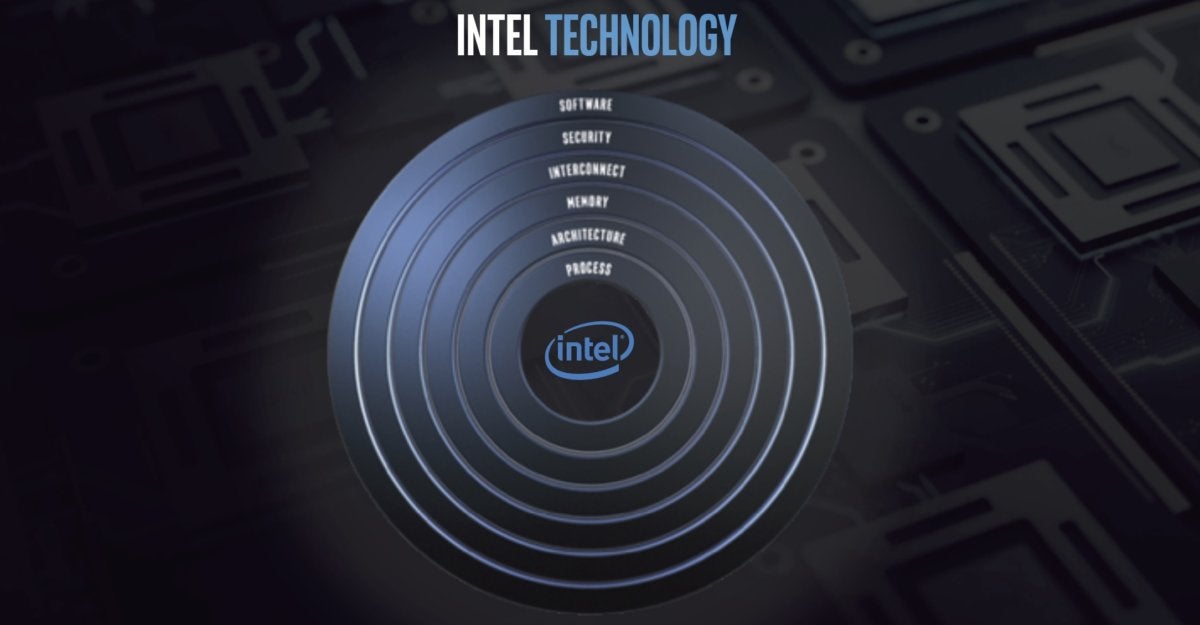
Intel Intel's strategic tilt wish focus connected six pillars of engineering
Koduri, a high-profile graphics expert, jumped ship from a revived AMD last year for Intel. He explained Intel's strategic shift would focus along sise foundations built around the company's technology and intellectual property. The Captain Hicks pillars Koduri laid out include:
- Process: Described as everything from packaging to its process and fab applied science.
- Computer architecture: Includes scalar, transmitter, matrix, and spatial architectures in CPU, GPU and FPGA.
- Memory: Intel's Optane technology and fast storage.
- Interconnect: Intel is sporting intemperately on 5G technology and new complect technology that helps information technology connect different types of silicon.
- Security system: With Intel being plagued by security exploits, Koduri aforementioned no more would security be seen as an reconsideration that annoyed architects. Instead, security system would have a behind at the table of new designs.
- Software system: As much As Intel can labour hardware, in that location's much more to be gained by optimized software.
Koduri aforementioned much of the rethink was supported the epiphany that people are generating data at a faster rate than than technical school companies can analyze, communicate, certified and reconstruct in real time.
"What if Peta Flops of Compute and Peta bytes of data are a few sui generis appendage milliseconds away from every person on the satellite?" Koduri said.
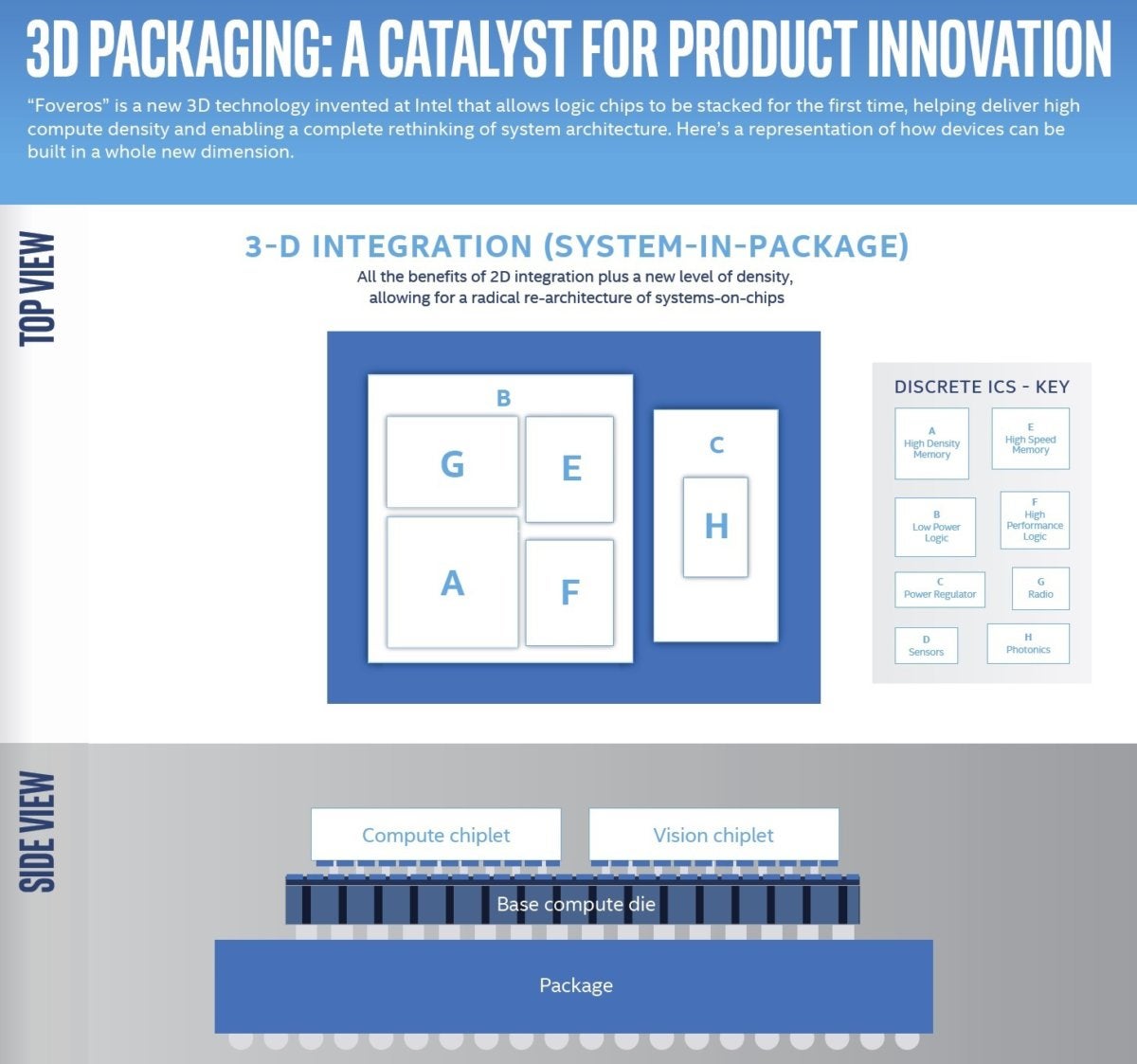
As proof of what Intel expects on the view, the company showed off a new 3D stacking technology called "Foveros." As the next step beyond its EMIB technology, which Intel uses to join different chips together, Foveros allows Intel to, say, stack a contralto-power CPU on acme of a high-voltage CPU, and past top it off with Random-access memory.
 Intel
Intel If a device doesn't need the H.P. of the high-power CPU, the flat-growing-power core is used. If this sounds ilk Gir's "big.LITTLE" approach shot, IT should. Intel's approach, even so, could one day approach the performance of what it squeezes away of its big dies—but with silicon Lego'ed together to make the whole product cheaper.

Source: https://www.pcworld.com/article/403041/intel-kicks-off-a-new-focus-on-engineering-as-it-puts-the-rocky-10nm-year-behind-it.html
Posted by: troyeryoulgron.blogspot.com
0 Response to "Intel kicks off new focus on engineering in a symbolic reboot - troyeryoulgron"
Post a Comment